Capital Unlocked · Open to everyone

Saved money sleeps. I put mine to work.

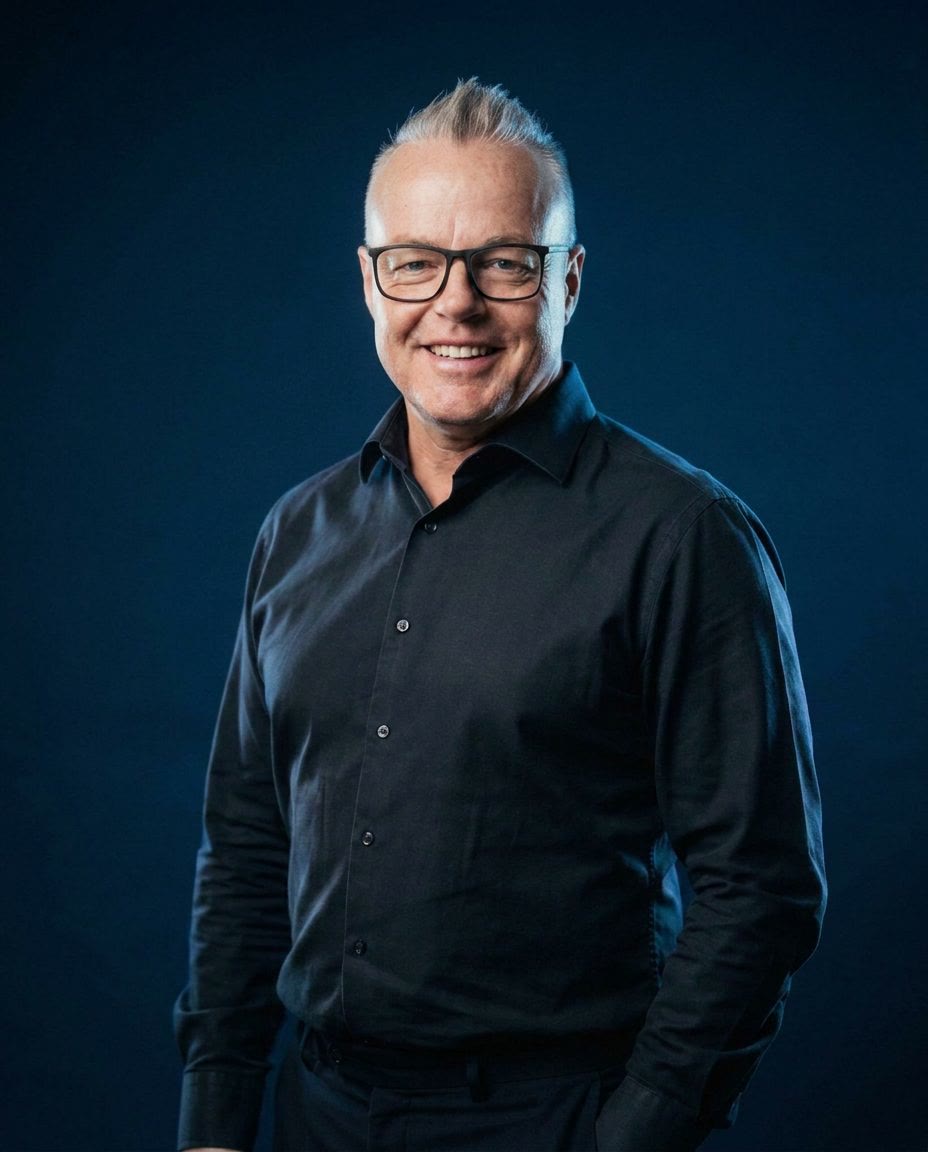
Mathias Loder

Sonic AI Copy X on TagMarkets

Sharing my journey and experiences — Mathias Loder

Follow me on my trading journey with Sonic AI Copy X on TagMarkets. A real turning point that could be yours too. Whatever amount you are sitting on — small savings, business profits, crypto or money you inherited — I will show the way I put mine to work.

I am Mathias Loder. A regular business person — not a banker, not an advisor. My money used to sit still while everything around it got more expensive. I decided to do something about it, and to do it in the open: what I put in, what happens month after month, the good months and the flat ones. This page is that journey, written down so you can follow it and judge it for yourself.

Follow a live Sonic account on MyFxBookRead the setup guide

Copy Trading made simple for everyone

A way of managing your money that could change your life

Sonic AI and Copy X, through their smart AI-driven way of trading, are helping me increase my capital by 15 to 20% each month. And I do not have to lift a finger except to withdraw or reinvest the profit.

So: follow this story, get in touch with me if you have questions, and decide for yourself what amount you want to put to work. Small or large, with me or without me — but do something, instead of letting your money sleep.

For ordinary people

Money either sleeps or it works

A regular person holding a small grey savings bag in one hand and a much larger glowing blue bag with a rising chart in the other

Some of us live on a salary, some build a business, some have savings or money they inherited. We all start from different places. But the money itself only ever does one of three things.

Money I spend

It is gone. That is fine — some of it has to be spent.

Money I save

It sleeps. It is safe, but prices keep rising around it.

Money I put to work

It carries risk, but it has a chance to grow.

Most of my available cash used to sleep, or it was put into business ventures to work. And to be honest, because of a lack of knowledge or trust in trading, I never took the step to put money to work in Forex. I simply did not know how it worked and I did not want to take unnecessary risks. With Sonic AI and Copy X that changed.

Every amount counts

The size of the start is not the point

Someone starting with 100 dollars is doing exactly the same thing as someone starting with 10,000 or a million: they stop letting their money sleep. The percentage is the same for everyone — only the number in front of it looks different.

That matters to me. Most people who start will not start with a fortune. They start with what they have, and they deserve the same answers and the same honesty as anyone starting with a large amount.

This is the part that changed how I think. An amount left alone to build on itself, instead of being spent along the way, can look very different a few years later. The calculator further down lets you run your own amount through that arithmetic.

I am simply showing you the door I chose to walk through.

— Mathias Loder

What I actually put my money into

Sonic AI Copy X — an automated gold strategy, explained the way I understood it

I liked the simplicity. Gold is the market. A desk of experienced traders does the trading, and their positions are copied into a broker account that stays in my name, that I control and can withdraw from. I do not have to become a trader myself.

This is the explanation from the team behind the system, not my own sales pitch. I watched it before I decided anything, and I would rather you hear it from them than from me.

What it is

  • A rules-based strategy that trades one market: gold.
  • Run by a desk of three professional German traders overseeing every trade.
  • Mirrored straight into your own licensed TagMarkets account.
  • Tracked on a third-party verified account that anyone can read.

What it is not

  • Not a fund or a deposit you hand over. The account stays in your name.
  • Not a signal group. There is nothing for you to place or time.
  • Not a guarantee. Losing months happen and they are published too.
  • Not advice. I am not a financial advisor.

One market, studied closely

Gold has deep liquidity, decades of history and long trends. One instrument rather than dozens.

No decisions asked of you

Once connected it runs on its own. No charts, no alerts, no daily screen time.

You decide what compounds

Nothing is reinvested behind my back. Profits stay available to withdraw, or go into the next 30-day trade with one click.

A record you can audit

Every closed position lands on the verified account. Nothing is filtered before it reaches you.

Trading carries risk, including the risk of losing your capital. I am not a licensed financial advisor, I do not manage anyone's money and nothing on this page is advice or a recommendation — it is a description of what I use and how it works.

What you can check yourself

People you can actually meet

The part I value most about Sonic AI Copy X on TagMarkets is how openly it is led. There is a head office in Dubai that can be visited — by appointment, so the right people are there and have time for you. I have sat down with the owner of TagMarkets in the Dubai office myself — a calm conversation over coffee, where I could ask my questions directly. The team also travels, so there are regular chances to meet them on the road, and online meetings you can join to hear the people behind the system and the stories of other investors. From one investor to another, that openness is worth more than any screenshot.

People you can actually meet

What I required before I put in my own money

Five things I will not bend on

Before I moved any of my own money, I wrote down five things that had to hold up. Not opinions — conditions. If any one of them had failed, I would have walked away and there would be no page here. They are still the same five things I check every month, and they are the same five things I would ask about if someone else were showing this to me.

Mathias Loder

Transparency

I have to be able to see the trading, not a summary of it. A public record I can open at any hour, with the losing trades still in it.

Risk before return

I need to know where the system stops before I know what it can earn. The drawdown limit comes before the return.

My money in my name

The funds sit in my own broker account. Nobody, including me, can move your money for you.

Automation with built-in stops

No one is making emotional decisions on my account at two in the morning. The rules and the stops are set in advance.

Real people I can ask

I have spoken to the owner himself, to the management team and to the community — people who have been in this far longer than me. I keep asking them week after week. If they went quiet, I would take that seriously.

I check these five every month. If one of them stops being true, I will say so here before I say anything else.

If you have tried this before

Tried Forex before? Then you already know what breaks

Mathias Loder sitting at a desk, thinking through a decision

Most people I have met who lost money in currencies or gold did not lose because they were lazy. They lost to the same handful of things, over and over. Those four are exactly what I checked first, because I did not want to repeat someone else's mistake with my own money.

Leverage with no loss limit

One bad run erases months. Here the loss limit is defined before any money goes in, and I knew that number before I funded anything.

Emotion in the driver's seat

Revenge trades, moved stops, doubling down. I know myself well enough to know I would do all three. The system does not ask me to decide anything.

Signal groups and screenshots

A screenshot is not an account. What I follow is a live record and my own statement, and so can you.

Brokers on the other side

One of the first things I wanted to understand was how the broker is paid when I trade, and whether its incentives line up with mine. A-book execution is what I asked about.

Do not take my word for it

I looked at it with my own eyes and asked people who were already in it, one ordinary person to another. I started with an amount I would have been fine losing and watched the statements for a few months before I did anything bigger. That was my way of testing it. What you do with your money is entirely your call.

What changed in September 2025

September 2025: amplified accounts

Amplified accounts — the same strategy, 12× or 24× the exposure.

This is the part that made me pay proper attention. In September 2025 the desk introduced amplified accounts. Same account in my name, same strategy, same risk-first approach — the only difference is that the trading capital behind the balance is amplified, so a month the strategy would have called 1% is worked at 12× or 24× that exposure.

How it is financed, as it was explained to me: the extra trading capital is not my money and it is not borrowed against me. My own deposit stays in my account as the security behind it. That is why the loss limit exists — whoever finances the capital needs to know where it stops: 5% of the balance on 24×, 10% on 12×.

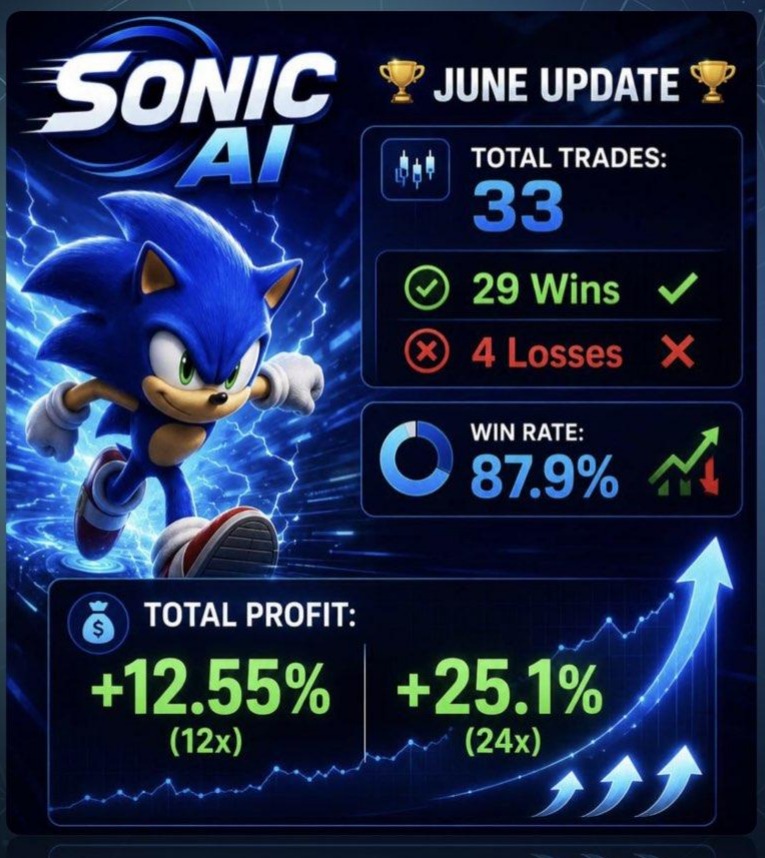
Sonic AI June update: 33 total trades, 29 wins, 4 losses, 87.9% win rate, total profit +12.55% at 12x and +25.1% at 24x
A monthly update published by the desk. One month, already past — not a forecast of what any future month will do.

24× amplification

1% becomes 24%

A 1% month on the underlying strategy is worked at 24 times the exposure. As documented by the desk it runs under the tighter of the two monthly loss limits — 5% of the balance — which on $1,000 means a bad month is structured to stop at about −$50. Bigger movement in both directions, and a tighter brake, because more financed capital is at stake.

12× amplification

1% becomes 12%

Half the amplification, with a documented monthly loss limit of 10% — on $1,000 a bad month is structured to stop at about −$100. Less financed capital at risk, so more room before the brake is pulled. Which one to pick is not my call to make for anyone.

Amplification multiplies both directions. It does not make anything safer — it makes every outcome larger and faster. Nothing here is a projection or a promise of any return, and I only ever put in money I could afford to see go the wrong way.

What I looked at before I decided

What the strategy has actually done, month by month

Before I put in a single dollar I wanted to see a history, not a promise. This is the published monthly record of Sonic AI Copy X on TagMarkets, from the first month in November 2024 until now — around 1.16% per month on average on the underlying strategy. It is the strategy's own record, not my private account. Switch between the plain strategy and the amplified views to see the same months at 12× and 24×.

Months in the published record

21

Monthly average

+1.16%

Strongest month

+1.78%

Weakest month

+0.55%

Monthly return, published record

Compounded index, start = 100

An index of 100 compounded through the published months would end at 127.43 — a cumulative +27.4% before fees and the profit split. It is a way to read the history, not a return anyone was paid.

Figures published by the trading team. Some months are stronger than others, past results are no guarantee of anything, and the amplified views are the same months multiplied — the losing months multiply the same way.

What is happening right now

Every trade, published as it closes

This is the summary of the current month on the public Sonic AI account, updated automatically: net result, number of trades and win rate. It is the strategy's own account, not mine. Every single trade, month by month, with drawdown, is on the ROI page.

Figures come straight from the public Sonic AI account and can change during the day. This is not my private account, and past results are no guarantee of anything.

Who stands behind the broker

Interview with Nicklas Freihöfer, CEO TagMarkets

A relaxed conversation with the head of the broker where he talks about how the company works. Worth a listen if you like to know who is behind things.

Interview with Nicklas Freihöfer, CEO TagMarkets

  • The CEO of the broker speaking in his own words.
  • TagMarkets is a licensed broker — that was the first thing I looked at.
  • He says client trades are passed to the market, so the broker and the client want the same thing.
  • A good way to get a feel for the people behind the platform.

Excerpt from a longer interview with Nicklas Freihöfer, CEO TagMarkets

What Nicklas says in the interview — his own statements about his company, not findings of mine:

  • How TagMarkets started and where the licence sits.
  • How the platform ranks copy traders automatically.
  • The amplified accounts — 12x and 24x — and why they exist.
  • 75 liquidity providers, support around the clock and fast withdrawals.
  • Client money held in segregated bank accounts in Europe.
  • Where he wants to take the company over the next few years.

What the numbers say when you zoom out

How the strategy behaves over 578 trades

One good month tells you nothing. What I wanted to see was how it behaves over hundreds of trades, and that record is public and third-party verified — anyone can read it, including you. What it says is simple: it wins more often than it loses, the winners are bigger than the losers, and the losing runs have stayed short. That is what convinced me to start, not the headline percentage.

Win rate
82.87%
478 winners out of 578 closed trades
Profit factor
2.38
2.38 USD earned for every 1 USD lost
Average win vs average loss
+$196 / -$82
Winners are bigger than losers
Longest streaks
14 wins / 2 losses
Losing runs stayed short
Activity
≈ 25–30 trades a month
Roughly one trade a day, automated
Best day / worst day
+3.18% / -1.20%
The full daily range on record
Market traded
XAUUSD (gold)
One market, one set of rules
Desk experience
15+ years
German traders overseeing every trade

On an amplified account the same trading is done with more capital behind it: 1,000 USD of your own is traded as up to 24,000 USD of trading capital at 24×, which is why 1% becomes 24% — and why the monthly loss limit is set tighter there.

Verified by Myfxbook, figures as of 13 Aug 2025. Past results, not a promise of future ones.

The question I asked first

The first question is how much can it lose

Everyone else opens with returns. I opened with the losing side, because that is the number that decides whether you are still standing after a bad stretch. The strategy runs under a fixed monthly loss limit, so a bad month has a floor written into it instead of an open ending. That was the condition I needed before I moved any of my own money.

In plain words: each amplified account has a line drawn under it every month. Trading for the month is designed to stop when losses reach that line, and it starts again the following month. The higher the amplification, the tighter the line.

24× amplification

5%

documented monthly loss limit — on a $1,000 balance that would mean a bad month is structured to stop at roughly −$50

12× amplification

10%

documented monthly loss limit — on a $1,000 balance that would mean a bad month is structured to stop at roughly −$100

Risk summary

  • Current max drawdown: -0.86% (very low)
  • Risk of ruin (99%): 36 consecutive losses for standard accounts
  • At 2x higher risk (99%): 40 consecutive losses
  • At 12× and 24×, losses are 10% and 5% respectively of deposited capital in the account
  • Strict position sizing on every trade
  • Capital preservation before capital growth

In practice the record has stayed far inside those limits. The largest drawdown documented on the third-party verified Sonic account is 0.86%, well below the monthly cap on either amplified setting. Past results are not a guarantee, but it is the reason I treat the limit as an outer boundary rather than something the strategy is expected to reach.

A loss limit is a cap, not a promise. It describes how the account is structured, not what it will earn, and it does not guarantee the exact figure in a fast market. Losing months are possible at every setting, and amplification multiplies both directions.

The technical risk statistics published on the verified account — including risk of ruin — are in the FAQ further down.

The maths I did for myself

What happens if you let the profits stay in and work for you

Profits are credited to your account after every closed trade, so unless you withdraw them they stay in and keep working. The calculator below groups them into a monthly rate simply to make the maths readable.

This is the calculator I sat with before I decided anything. Pure arithmetic: a deposit, a monthly rate, a number of months. No rate holds forever and losing months are part of every real record — but it made one thing concrete for me. The difference between money that sits still and money that works is not the first month, it is the twentieth.

Compounding illustration

$100
1.06%

The slider moves between the weakest and the strongest month in the published record (0.55%–1.78%), and deliberately starts below the median, at a cautious month (1.06%). It is a rate you choose, not a rate anyone is offering you, and real months land above and below it, including below zero.

Account type

Standard account: the rate you typed in, month after month.

Illustrated monthly rate: 1.06% gross → 0.74% credited to you after the 70% profit share

1 year

Reinvest profits

Profits stay in the account and compound each month.

Read this before the numbers

This is arithmetic, not a forecast. It compounds whatever rate you type in — it is not an offer, not a projection and not advice, and no rate here comes from me or from anyone else. Real months land above and below any rate, including below zero. The amplified settings show what the same arithmetic looks like if a month lands the way TagMarkets describes amplified accounts, and only while those accounts are offered. Every figure here already has the 70% profit share deducted, and one steady rate is smoother than any real year — the actual trade-by-trade record is on the ROI page.

Illustrated balance

$109

After 1 year

Illustrated profit

$9

After 1 year

Compounding curve

$109

Month by month

Reinvesting · 0.74% per month

MonthMonthly profitTotal profitAccount value
01$1$1$101
02$1$1$101
03$1$2$102
04$1$3$103
05$1$4$104
06$1$5$105
07$1$5$105
08$1$6$106
09$1$7$107
10$1$8$108
11$1$8$108
12$1$9$109

Illustrative only

This calculator is for illustrative examples only. It compounds a fixed rate you choose yourself and is not a forecast, a promise or a projection of what any account will do. Real returns vary month to month and can be negative. Actual results may differ substantially.

Set the rate to something you actually believe in, not the best month on record. If the number still looks worth it at a conservative rate, that tells you something. If it only works at an optimistic rate, that tells you something too.

The question I asked before I asked about returns

How does the broker work — this is what I checked first

Before I looked at any strategy I wanted to know one thing about the broker: does this company make money when I make money, or when I lose it? I did not know there were two models until I started asking. Once I understood the difference, I could not unsee it.

A-book · Straight through

Your order goes to the real market

The broker passes your trade on to a liquidity provider and earns from the spread and commission. It makes no difference to them whether you win or lose — they are paid for the volume you trade, not for your losses. Your interests and theirs point the same way. This is the side I wanted to be on.

  • No conflict of interest with profitable clients
  • Real market pricing, real fills
  • Winning accounts are welcome, not a problem to be managed

B-book · Kept in house

The broker takes the other side

Your order never leaves the building. The broker becomes your counterparty, so your loss is their revenue and your profit is their cost. There is nothing illegal about it and it is common — but I did not want my broker sitting on the opposite side of my own trade.

  • The house profits when clients lose
  • Consistently profitable accounts can get restricted or slowed down
  • Pricing and execution are set internally

Where Sonic AI Copy X sits

Sonic AI Copy X runs on an A-book setup

TagMarkets describes its model as A-book: client trades are passed on to the market, and the broker is paid from spread and commission on the volume traded rather than from client losses. Its CEO says the same in the interview above. That was the answer I needed before I funded anything — I am repeating how they describe it, not auditing their books.

This is why I put the broker question before the strategy question. Ask any broker directly how they handle your orders — if the answer is vague, that is the answer.

What I did, in order

Three simple steps. 10 minutes.

This is exactly the order I went through it myself. No trading knowledge is needed, and nothing is paid to me at any point. If you get stuck somewhere, write to me and I will walk you through the same steps I did — that part is free and stays free.

01

Register, free and without obligation

You register on CopyX and confirm your email. That alone gives you access to the AiTech community and the TagMarkets platform, at no cost and with no commitment. You can stop right there and just look around for as long as you want. I did that for a while before I did anything else.

02

Verify and fund, only if you decide to

If you go further, you verify your identity — ID or passport plus a quick face check — and fund your own TagMarkets wallet. Crypto is the fastest route. The money stays in your account, in your name. I never receive it, hold it or have access to it.

03

Connect Sonic and watch it work

In CopyX you open Sonic, enter the amount, choose the account type and confirm the terms. From there it trades on its own and you can follow every position live in the MetaTrader 5 app. I still open that app most days — not because I need to, but because I want to see it for myself.

Take the first step only. You do not have to decide about the rest today.

Earning through referrals

CopyX affiliate programme - trade and refer!

The referral program is free, and it is completely optional — you can use the strategy for years without ever telling a single person. But if you do, you get paid from the trade profits.

Get in touch

Ask me anything that is still unclear

Nothing here expires and nobody is chasing you. Send your questions and I will answer honestly — including the ones where the honest answer is "I do not know" or "this might not be for you".

Your details are used only to reply to you. No lists, no resale, no automated sales sequences.

Latest news

News from TagMarkets and Copy X

The latest company updates and independent coverage, collected in one place. New stories are added here as they are published.

Latest

TIME Africa

Tag Markets welcomes new CEO as the brokerage builds for long-term global scale

Tag Markets welcomes new CEO as the brokerage builds for long-term global scale

Craig Lund takes over as CEO, bringing experience from regulated digital-asset and brokerage businesses as Tag Markets prepares for its next phase of global growth.

Read the article

Business Insider Africa

Transparency as the business model, not the marketing

Transparency as the business model, not the marketing

How TagMarkets handles orders, pricing and client funds — the questions I asked before I funded anything.

Read the article

TIME Africa

One of the world's largest forex and CFD brokers

One of the world's largest forex and CFD brokers

An analysis of the size, volume and reach of the broker the strategy runs on.

Read the article

Rolling Stone MENA

From a 2023 launch to a global brokerage

From a 2023 launch to a global brokerage

The story of how a young company grew into an international broker in under two years.

Read the article

Robb Report Africa

Making copy trading simple enough for ordinary people

Making copy trading simple enough for ordinary people

Why the copy side is built for people who do not trade themselves — which is exactly what I needed.

Read the article

Questions people actually ask

Frequently asked

Register
Register